


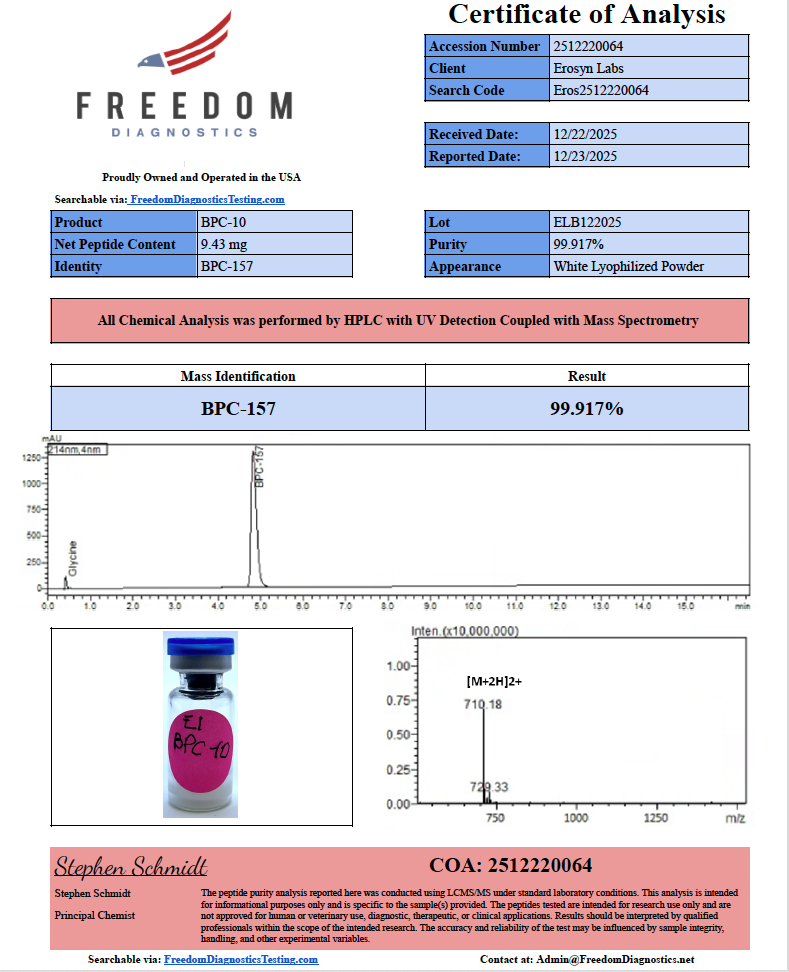

What is BPC-157?
- BPC-157 (Body Protection Compound-157) is a synthetic peptide derived from a naturally occurring protein found in human gastric juice. It is studied for its role in tissue repair, inflammation regulation, and cellular recovery mechanisms.
- Because of these properties, BPC-157 is widely researched in studies involving muscle, tendon, ligament, joint, and gastrointestinal tissue repair. Unlike compounds that act through hormonal pathways, BPC-157 works locally at the cellular level.

What Studies Have Found
Helps Maintain Structural Tissue Integrity
Helping the body recover more efficiently after strain or injury-related stress.
Helps Regulate Stress Response in Tissues
For balancing cellular stress responses during injury or inflammation.
Supports Long-Term Tissue Resilience
Commonly researched for maintaining durability and function of tissues under repeated stress.
Supports Faster Recovery After Physical Stress
Explored for its role in recovery processes involving nerves and muscle signaling.

Potential Side Effects
- Injection Site Reactions – Mild redness, swelling, or discomfort may occur at the site of application.
- Temporary Fatigue – Some research observations note short-term tiredness as the body adapts to repair signaling.
- Headache – Changes in blood flow or cellular signaling may contribute to mild headaches.
- Nausea or Digestive Upset – Temporary stomach discomfort has been reported in some research settings.
- Dizziness or Lightheadedness – May occur briefly during early exposure.
- Inflammatory Response – Short-term inflammation can occur as part of active tissue repair processes.
- Allergic Sensitivity (Rare) – In rare cases, immune sensitivity reactions may occur depending on individual response.